
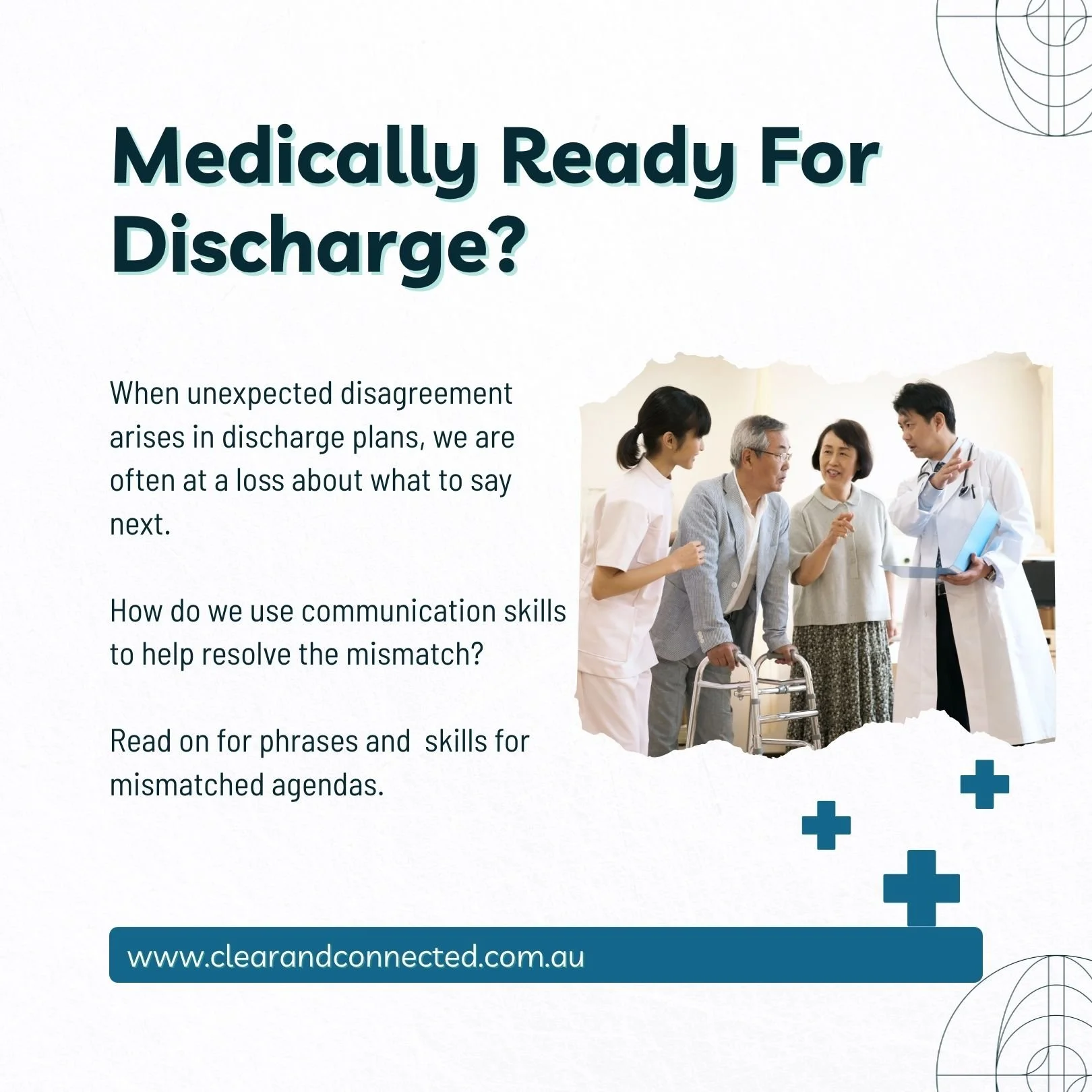
Medically stable for discharge…
When unexpected disagreement arises in discharge plans, we are often at a loss about what to say next.
How do we use communication skills to help resolve the mismatch?
Read on for phrases and skills for mismatched agendas.
What’s in a question? Responding to emotions
What’s in a question? As clinicians we are primed to answer questions with facts, after all we’ve learn so many. But sometimes something more is needed.
Questions may demand an answer, but also require understanding and support for the emotion within the question.
When you’ve answered a question and it seems hard to move on, consider whether you have responded supportively to the emotions within the question. Becoming skilled at this
Read on for communication micro-skills that may help…

The Step Before: Noticing how we feel before we speak
Have you ever thought about why we sometimes avoid or delay giving bad news, rush the process or hide in jargon?
When there is important life-changing and sad information to share our own feelings of distress may lead to communication habits that don’t serve our patient’s needs for clarity well.
In this blog post I discuss how a moment of self-reflection and an setting intentional choices for our communication could improve the experience for our patients and ourselves.

Thinking About Saving Time
Saving time is one of our biggest challenge as busy clinicians. There’s so much information to gather and decisions to make.
We ideally want our patients to feel heard, and address their most pressing concerns.
Luckily with some simple steps we can do both. Here are some brief tips on balancing structure and relationship in our clinical conversations.

Reframing the “can of worms”
The “can of worms”. A phrase I hear from time to time from learners in communication skills sessions, referring to concerns about expression of emotions.
However, far from being a distraction, emotional expressions from patients are valuable data about what matters most to them, and will help with shared decision-making about their care.
Reframing the “can of worms” as important data, and using effective strategies to respond to emotion, can transform a clinical conversation, getting to the point more quickly, with more meaning for the patient and better rapport.

Silence is Golden
Reflections on making the most of those rich, quiet conversational moments where all might be revealed… and thoughts on being conscious of the impact of interruptions.